
Picture a cozy yet cutting-edge home. That’s what modern tiny housing offers. These compact dwellings range from 300 to 1,000 square feet.
Micro apartments blend style, function, and affordability. They’re perfect for minimalists in busy cities. Smart features and efficient layouts make the most of every inch.
Hand Crafted Movement and Minimaliste Houses lead this housing trend. Their custom-built models start at $75,900. Tiny Heirloom offers a 500-square-foot Hawaiian retreat at this price.
Want to learn about tiny living? Call Santa Clarita ADU at (661) 486-8393. They can tell you more about these cool urban spaces.
Key Takeaways
- Tiny homes range from 300 to 1,000 square feet
- Perfect for young professionals seeking minimalist urban living
- Custom-built models start from $75,900
- Combine style, functionality, and affordability
- Feature multi-functional furniture and innovative storage
- Offer energy-efficient systems for sustainable living
Contemporary tiny housing options for young professionals
Tiny homes are changing affordable housing for young professionals. They offer smart design in small spaces, usually 800 to 1,000 square feet.
These homes have 1 to 2 bedrooms. They provide cozy yet useful living spaces.
Modern tiny homes come in various styles:
- Sleek, minimalist designs with clean lines and open floor plans
- Rustic barn-style homes featuring reclaimed wood and gambrel roofs
- Charming cottage-style houses with gable roofs and inviting porches
- Unique conversions like boathouses and grain silo guest houses
| Type | Price Range |
|---|---|
| DIY Kits | $10,000 – $20,000 |
| Prefab Stationary | $35,000 – $68,000 |
| Prefab Mobile | $60,000 – $80,000 |
| Custom-Built | $25,000 – $200,000+ |
| Luxury Minimalist | $150,000 – $235,000+ |
Learn more about tiny homes in Santa Clarita at santaclaritaadu.org. Or call (661) 486-8393.
Try tiny living and find your perfect small home today!
Smart Design Features for Maximum Efficiency
Tiny homes revolutionize compact living through efficient design. These small dwellings pack a punch with innovative features.
Most tiny homes are under 600 square feet. They maximize every inch of space.
Innovative Storage Solutions
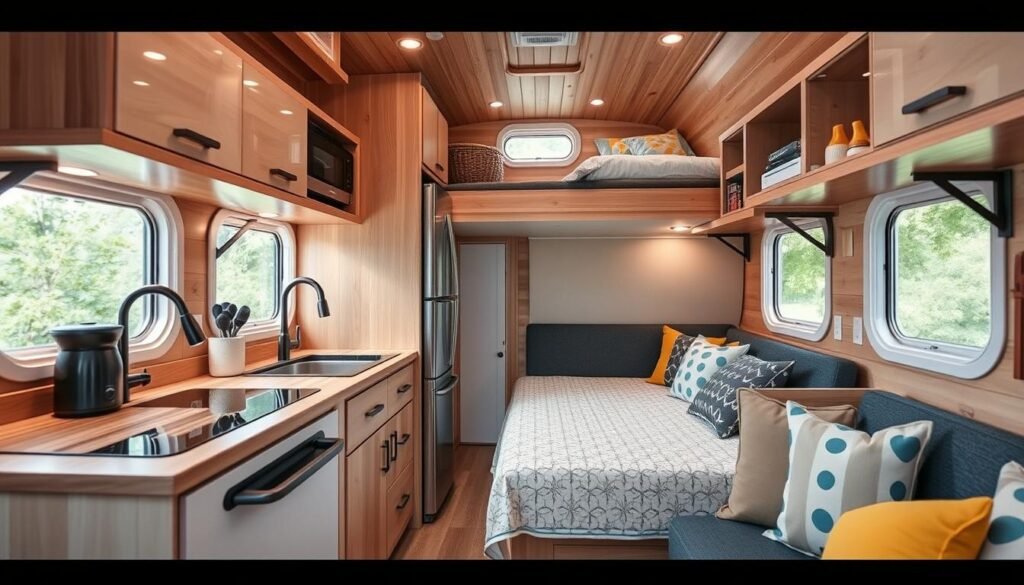
In tiny houses, clever storage is key. Built-in staircases double as drawers, while wall-mounted shelves utilize vertical space.
Loft areas create extra storage without sacrificing floor space. Some designs use sliding barn doors for storage and privacy.
Multi-functional Furniture
Furniture that serves multiple purposes is essential in tiny homes. Convertible sofas transform from seating to sleeping areas.
Expandable dining sets adjust to accommodate guests. Wall-mounted desks fold away when not in use.
Space-saving Appliances
Compact appliances are crucial for efficient design in tiny homes. Combination washer-dryers save space and energy.
Mini-fridges and induction cooktops fit seamlessly into small kitchens. These smart appliances contribute to overall space optimization.
| Feature | Benefit | Space Saved |
|---|---|---|
| Built-in Storage Staircase | Extra Storage + Access to Loft | 15-20 sq ft |
| Murphy Bed | Bedroom/Living Room Combo | 30-40 sq ft |
| Combination Washer-Dryer | Laundry Solution in One Unit | 5-10 sq ft |
Tiny homes offer a practical solution for affordable, efficient living. Visit santaclaritaadu.org or call (661) 486-8393 to explore innovative designs.
These designs can transform your living experience. Discover how tiny homes can work for you.
Sustainable Living in Tiny Spaces
Tiny homes champion eco-friendly housing and sustainable living. These small dwellings use green tech to reduce environmental impact.
Energy-efficient Systems
Tiny homes use LED lights and smart thermostats to save energy. These features lower bills and shrink carbon footprints.
Energy-saving appliances boost efficiency in these compact spaces. They help make tiny living more eco-friendly.
Eco-friendly Materials
Sustainable tiny homes start with green building materials. Reclaimed wood, recycled metal, and low-VOC paints are top picks.
These materials cut waste and improve indoor air. Good insulation and efficient windows keep homes comfy.
Solar Power Integration
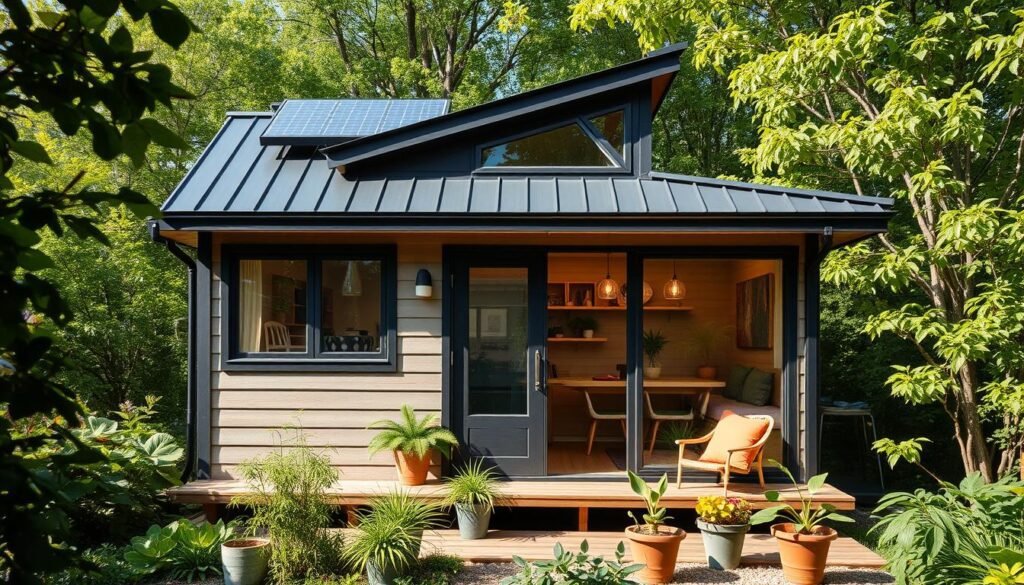
Solar panels give tiny homes freedom from the power grid. Many have rooftop panels for clean energy.
This green tech lets people rely less on regular power. It helps them live more sustainably.
Smart water systems boost tiny home sustainability. Composting toilets and rain collection save water and reduce waste.
These features fit the eco-friendly housing trend. They make tiny homes great for earth-conscious folks.
| Sustainable Feature | Benefits |
|---|---|
| LED Lighting | Reduces energy consumption by up to 75% |
| Solar Panels | Provides clean, renewable energy |
| Composting Toilets | Saves water and reduces waste |
| Rainwater Collection | Decreases reliance on municipal water supply |
Want to learn more about sustainable tiny homes? Call Santa Clarita ADU at (661) 486-8393.
They can help you find eco-friendly housing that fits your needs.
Modern Amenities and Technology Integration
Tiny homes now use smart tech for high-tech living. These small houses have full-size appliances that save space and work well.
You’ll see smart fridges and small dishwashers. There are also space-saving cooking tools that make daily life easy.
Fast internet is common in modern tiny homes. It’s great for people who work from home.
Smart home systems let you control lights and heat from far away. This makes your home comfy and safe.
For fun, there are wall TVs and sound systems. Some tiny houses have electric fireplaces for heat and style.
Small, comfy work areas are popular too. They show tiny homes can have all the new stuff in less space.
| Feature | Benefit |
|---|---|
| Smart Home Systems | Remote control of lighting, temperature, and security |
| Full-size Appliances | Convenience without sacrificing functionality |
| High-speed Internet | Supports remote work and streaming entertainment |
| Compact Workspaces | Ergonomic design for productive home office setup |
Want to know more about new tech in tiny homes? Visit santaclaritaadu.org or call (661) 486-8393.
Financial Benefits and Investment Potential
Tiny homes blend affordable housing and investment opportunity. Basic models cost $30,000 to $60,000, far less than traditional homes.
The average US single-family house costs around $430,000. Tiny homes offer a budget-friendly choice for buyers.
Cost Comparison with Traditional Housing
Tiny homes save money beyond the initial purchase price. Their small size leads to lower utility costs and maintenance expenses.
Most tiny homeowners live mortgage-free. Many save more than the average American.
| Expense Category | Tiny Home | Traditional Home |
|---|---|---|
| Average Purchase Price | $30,000 – $60,000 | $430,000 |
| Annual Maintenance Cost | 3% of purchase price | 1-4% of purchase price |
| Utility Costs | Lower | Higher |
| Property Taxes | Lower | Higher |
Property Value Appreciation
Tiny homes can grow in value in desirable locations. Prime spots include areas near business districts, schools, beaches, and tourist spots.
Millennials and retirees increasingly want compact, sustainable living spaces. This trend boosts tiny home values.
Tax Benefits and Incentives
Some states offer tax breaks for eco-friendly tiny homes. Several states have friendly tiny home development laws.
Lower property taxes add to the financial appeal of tiny homes.
For more info on tiny home investments, visit santaclaritaadu.org or call (661) 486-8393.
Location and Zoning Considerations
Tiny house rules can be confusing. They change from city to city in the USA. Some places love tiny houses, while others have strict rules.
Zoning laws set rules for house size and utilities. They can affect your tiny home plans. Some areas don’t allow homes under 400 square feet.
Many cities are changing rules for tiny houses. Some have special tiny house areas. Others allow small homes in backyards.
This shows more people like different housing options. It’s a good sign for tiny house fans.
“Tiny houses promote intentional living and sustainability, reflecting a broader shift towards more mindful lifestyles.”
Check local laws before picking a spot for your tiny house. Ask city planners or tiny house groups for help.
For ADU advice in Santa Clarita, visit santaclaritaadu.org or call (661) 486-8393.
| Consideration | Impact on Tiny Houses |
|---|---|
| Minimum Square Footage | May restrict homes under 400 sq ft |
| Foundation Requirements | Can affect mobile tiny homes |
| Utility Connections | Influence off-grid capabilities |
| Parking Regulations | Determine where you can place your home |
Conclusion
Tiny houses offer a fresh take on housing for young professionals. These compact homes feature smart designs and eco-friendly living options.
Downsizing brings benefits beyond saving money. It’s about embracing a simpler, more purposeful way of life.
Tiny homes range from 100 to 400 square feet. They’re an affordable choice compared to traditional houses.
Most tiny homes cost less than $100,000. The median US house price is $282,800.
Challenges like zoning laws and financing options exist. But tiny living has many rewards.
You’ll enjoy lower utility bills and less maintenance. Plus, you can easily move your home.
Want to learn more about tiny houses? Visit santaclaritaadu.org or call (661) 486-8393.